Star Bonifacio Echeverria, S.A. — The company
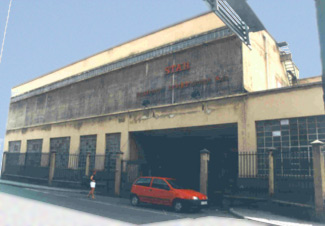
Information on Star as a company has traditionally been hard to get because they were an old-school European company. They tend to only want to communicate through the distributor network, and because in many countries their distributors consider them a second-tier brand, so did nothing to promote their story.
But the biggest problem if you have just found this website now is that they no longer exist. This is an informational or fan site, not the corporate website for Star Bonifacio Echeverria. Read on for the complete details as we have them. For more info, if you are ever in the Eibar region, be sure to visit the arms museum.
The Spanish version of Wikipedia has what appears to be a pretty good article on Star as a corporate entity. The following history is derived from a smattering of old articles in english-language publications including an old American Rifleman, some first-hand reports from factory employees, some information the company sent me before they went out of business, and some Google translations of contemporary news articles.
Bonifacio Echeverria and the ancestry of Star
Eibar is a city in Guipuzcoa province, within in the Basque region of Spain. The entire region but especially the town of Eibar has been a center of weapons development and manufacture for centuries. Long before firearms took over, "Spanish steel" was a well known selling point, for the quality, durability, and ability to hold an edge in battle. Firearms manufacture required many of the same skills, working in steel with wood accessories, so continued as a center of weapons development.
The oldest known ancestor of the Star lineage is Jose Cruz Echeverria, who made muzzle-loading firearms at the end of the 19th century. His wife's family, the Orbeas, had long been involved in numerous manufacturing ventures, including the manufacture of revolvers.
His two sons, Julian and Bonifacio, had sought to continue their family focus on firearms. Julian apprenticed at the Royal Arms factory in Placenia from age 16, then worked at several other manufacturing companies in the region, including a design job with firearms manufacturer Victor Mendizábal in San Sebastian. The two brothers entered the firearms business for themselves about 1905. Reportedly this was with a unique firearm, for which Julian held a patent, but I have no idea which pattern it may have been. In 1908 the new firm began selling a design which was substantially a Mannlicher Model 1900 in 6.35 mm. Read more on this early series of pistols.
Julian had always been interested in education, and in 1912 left the business to found the School of Firearms (Escuela de Arneria), the first vocational school in Spain. This school and the entire concept of vocational education was to have immense influence in fostering the development of industrial technology thoughout the province. Eibar, and the surrounding region, have remained with strong employment figures despite changes in local industry, and more recently the loss of much of the traditional manufacturing industries.
Meanwhile, his brother Bonifacio expanded and improved the plant and by 1914 released a new model, with much the same mechanism as the earlier Mannlicher clones, but notable improvements to the ergonomics, and overall usefulness.
Sometime in here the Bonifacio Echeverria company was formed, typically using the name of the founder as the name of the entire concern. Note that the formal name was Bonifacio Echeverria, S.A. The S.A. is not a model number, and never was. The S.A. stands for Sociedad Anónima (or any of a number of variations) and is broadly the equivalent of a "Corporation" in the US or other places.
World War I and expanded manufacturing
As is often the case with weapons makers, a government contract really made the company, in this case two completely different contracts. The one most associated with the Bonifacio Echeverria company was a French contract for a version of the 1914 pistol. The Model 1 Militar is basically a 7.65 mm caliber version of the Model 1914 designed for the French military, who referred to them as the Pistolet automatique, type Star, one of the first references to their later trade name.
The other contract was for the Pistolet Automatique de 7.65, type "Ruby," also for the French. This is a simplified copy of the Browning 1903 (made by Fabrique Nationale in Belgium). Some sources report that Bonifacio had input in the simplification/development of the design, but I cannot confirm this. Changes involved the safety mechanism, the elimination of the grip safety and a number of more subtle changes to simplify manufacture and mass-production.
Gabilondo y Urresti, also in Eibar, had been manufacturing the model 1903 since at least 1914 under contract, and was granted a contract to make 10,000 a month of the new pistol. They in no way were equipped for this scale of manufacturing, so immediately subcontracted to other area firms. Eventually some 30 companies made complete firearms, and many others made parts or performed other operations.
In the end they did not handle the outsourcing well, so quality issues plagued the contract. The French inspected all firearms before issue, and only accepted those that passed to troops in the field. It appears that rejects may have made it to the commercial market. Since the lowest quality guns were sold to individuals after the war, this led to a general view of Spanish pistols as cheap, unreliable knockoffs, which appears to persist to this day. The Bonifacio Echeverria pistols were always of excellent quality, and were additionally stamped Izarra or the Spanish for "Star," the first time this emerged in the company history.
The beginnings of Star
In 1919, Bonifacio formally registered the Star trade name, and all subsequent weapons were marked as such. This site covers all operations of the Bonifacio Echeverria company, even before it made "Star" firearms. Note that although some references say that the Basque and Spanish equivalents of Star are also registered (Izarra and Estrella), they are not commonly used. Izarra was also the trade name Bonifacio Echeverria used for their Baby Browning clones, but the name was not used further. I am not aware of any pistols produced under the "Estrella" mark.
Originally, Bonifaco had planned on producing a still more improved version of the model 1914, initially to meet a French follow-on contract for 50,000 pistols. However, the end of their war caused the cancelation of the contract, and Echeverria decided that pistols based on the general design of the Colt 1911 were more commercially viable.
It seems that Star officially pursued contract production of the Colt 1911 from Fabrique Nationale (FN had the European marketing rights for the pistol) but could not come to agreement on it, and decided that changes would be needed anyway to give it an "Eibar" feel. The factory was moved to a purpose-built facility along Torrekua Street in Eibar; this was specifically designed to facilite production of a range of arms, including submachine guns, in quantity.
From the Civil War to the 1970s
In 1920, Spain was a constitutional monarchy under the rule of King Alfonso XIII. There was increasing dissatisfaction with the rulers and manner of rule, and in 1923, Alfonso handed power to nominal dictator General Primo de Rivera. Despite public improvement programs and initial economic improvements, the great depression caused significant unemployment and other troubles.
An April, 1931 election resulted in Republican victories in all of Spain's major cities (including Eibar), and led rapidly to the King abdicating power to a new government and fleeing to exile. The monarchy was abolished and the Second Republic was established.
Throughout this time, the Bonifacio Echeverria factory continued to produce weapons, with most destined for export. Despite poor economic conditions worlwide, and especially in Spain, steady re-armament and upgrading of arms in the inter-war period led to regular sales of handguns of all types. Commerical pistols also enjoyed good success, but the unusual -35 series SMGs were rejected, after serious evaluation, by US and UK military forces.
The initially powerful Republican government rapidly lost allied, from the church, to regional factions desiring autonomy, and eventually to the bulk of the working classes. Power switched sides, from left to right, several times, but several unfortunate massacres and a failed 1932 coup were just precursors to an all out civil war. In 1936 Franco led a force to overthrow the Nationalist government then in power.
Eibar – and all of the Basque region – was initially a loyalist, or Republican, region and production was dedicated to government forces until the fall of much of the Basque region to Franco's forces in 1937. From then onward, Star firearms were supplied to Nationalist rebel forces. The -35 series submachine guns were particularly important to the war effort. It appears no effort was made on behalf of either administration to press the Star factory into producing other arms, or sub-contracting any parts or other war materiel.
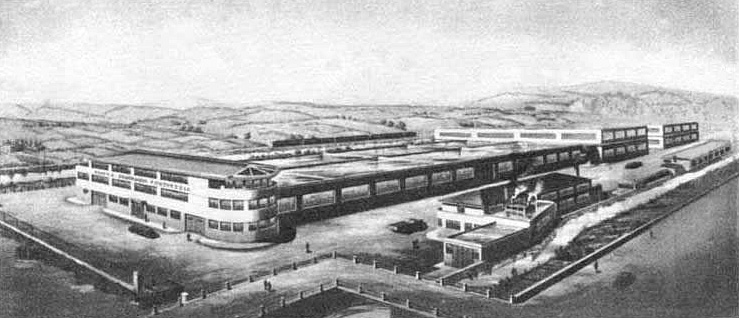
After the war the Star factory resumed production, and continued to develop new arms. The -35 series evolved, and was greatly simplifed, into the Z45, which was adopted by the Spanish Army in great numbers. It was exported to many countries including Chile, Cuba, Portugal and Saudi Arabia, and remained in service until at least the 1970s, despite the presence of more modern arms, in all of those countries.
During WW II, the Star factory produced numerous arms for export to countries engaged in the war, mostly Axis and other aligned countries. Smaller Star pistols, such as the Model S, were used by aircrews, and full-sized guns (such as the Model B) were employed by police, second-line units and certain specialist troops. Star also enjoyed some success with commercial sales of their arms to soldiers in these same countries.
The Spanish armed forces replaced their SMGs with a series of ever-improved Star firearms, first the Z-62, then the Z-70s, and finally the Z-84. The later guns are less-encountered both due to the replacement of the SMG with the assault rifle, and the longevity of the older weapons; Z-62s are still used day to day by the Spanish Navy, for example.
The handgun line was also improved in steps, with improvements to safety, the easier-stripping Petter closed-cam-path system, and lightweight alloy frames. In many of these areas, Star was significantly ahead of the curve; others would not offer similar products for years or decades.
As well as design and feature changes, Star was an innovator in many areas of manufacturing. They were among the first European makers to use investment castings of high-grade steel parts. This forms near-finished parts, reducing the need for additional finishing which both saves on production costs, and reduces the chances for error in the tricky hardening steps. Cast parts have achieved a bad reputation due to many manufacturers executing them so poorly, but Star castings mostly cannot even be detected (without expert eyes). This, and other manufacturing processes Star helped pioneer are heavily used today by all firearms companies.
The end
The 1990s were bad for defense companies all over the world. For the most part, companies in smaller markets either found their niche and flourished (Diemaco), or slowly perished. In Spain Star, Astra and CETME met their end.
While Star introducted modern technology and manufacturing methods, including aluminum frames, plastics, and a selective double-action, double-column series of pistols, management crises and poor understanding of the new EU open markets led to reduced sales and profitability.
The final years at Star saw a relative flurry of new models, and court challenges over restructuring plans and massive layoffs.
Much of the descent was too slow to have perhaps noticed at the time. In 1975 the factory employed 411 workers, but this had slowly decended to to 141 in 1993. A plan was forumlated which would have cut half of those workers immediately, but this fell through.
Star filed for bankruptcy protection in late 1993 after taking out loans to invest in new CNC machinery. They were indirectly affected by the Asian economic crisis; Spanish banks tried to cover Asian investment losses by turning the screws on those nearby companies owing them money, like Star. Star and Astra began cooperative investment and discussions of mergers in the mid 90s, but Astra was not in much better shape, so this eventually dragged both companies down.
I heard numerous rumours around this time that a large foreign cooperative, like Beretta, would snap them up, as they did with Sako. This was not to be however (and really doesn't make sense from a product line point of view).
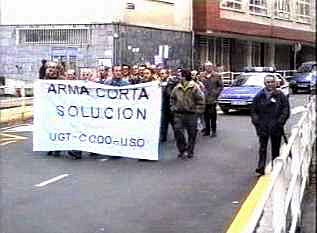
Employees of both companies, through their unions I believe, tried to set up a cooperative to take control of the companies. They planned to upgrade operations again, but also ran into trouble overextending themselves financially, and eventually these organizations also sought protection under bankruptcy laws.
On May 27, 1997 both Star and Astra closed their doors, and were placed in the Spanish equivalent of Chapter Seven bankruptcy, under the control of a Basque regional judge. Eventually, an agreement was reached that settled sufficient outstanding debt, and allowed some of the machinery and the intellectual property to be resurrected in two new companies. Much machinery was also sold at auction to pay debtors. Apparently all unassembled or unsold barrels and frames were destroyed by government order when the company closed. Unregistered parts were retained and seem to still be available thru Ipar (see below).
Star and Astra combined into one company under the ASTAR name, with a new factory, which manufactured a range of new firearms for about a year.
Another facet of the company was allowed to continue under the name Ipar Guns. They made a small number of custom weapons, conduct DEWATS on others, and provide a range of parts and gunsmithing services on Star and Astra pistols. I am not entirely clear on what the status is; the owner is active on some forums but there's no website and I cannot be confident any contact info will work still.
The Fate of Other Spanish Gun Makers
Llama was one of the few Spanish gunmakers to exist "intact," though actually under new management, as Fabinor. They made firearms and did general contract machining and forging under various restructuring schemes, but in 2005 failed to gain shareholder approval of their latest plan to get out from under debt, and were permanently closed.
CETME, the quasi-governmental research, development and manufacturing organization responsible for rifles and machine guns was in serious trouble for some years as Spain purchased the G36, but has seen a resurgence in favor. A new rifle based on the L/LC is in development and scheduled to be in the hands of Spanish troops by 2015.
About 20 of the storied Basque region gunmakers, including Aya, joined a conglomerate in the early 1980s to strengthen their financial position. They ran into other troubles, and DiArm, the resulting enterprise, went bankrupt and shuttered all operations in 1988.
A small number of high-end speciality manufacturers, such as Grulla Armas, Arrieta, Garbi, Ignacio Ugartechea, and Pedro Arrizabalaga, continue operations as small independent organizations. A bit of this history and a review of the detail of these firearms is posted at this site for those interested.
Astra Resurrected in Switzerland
I have no idea how this part transpired but Astra's patents and trademarks all transferred to a new Swiss company, Astra Defense, in 2008.
They make 1911-style pistols, AR-15 pattern rifles, and catalog MAG-58 and M2HB machine guns, and M203 grenade launchers, though it is unclear to me how much they make vs source and resell.
Their products are available in the European civilian market, and they have military sales in Central and South America, Asia, and Africa.
Eibar Arms Museum
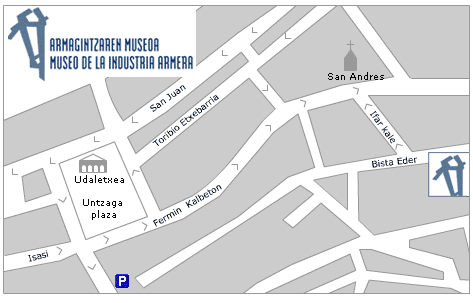
If you want to check out weapons and history of the Eibar region manufacturers, including Star, in person you can. As long as you can drive over to Eibar, Spain. The Eibar Museum of the Arms Industry is located on the fifth floor of a cultural building in the town center.
Museum of the Arms Industry
Bista Eder, 10 - 5.20600 Eibar (Gipuzkoa)
Tel. 943 708446
Fax. 943 708436
Contact form
Note that there is no parking at the museum, so look around for (relatively) nearby public lots if you are driving there.
Prices and hours (which do vary by season) are available at the museum information page